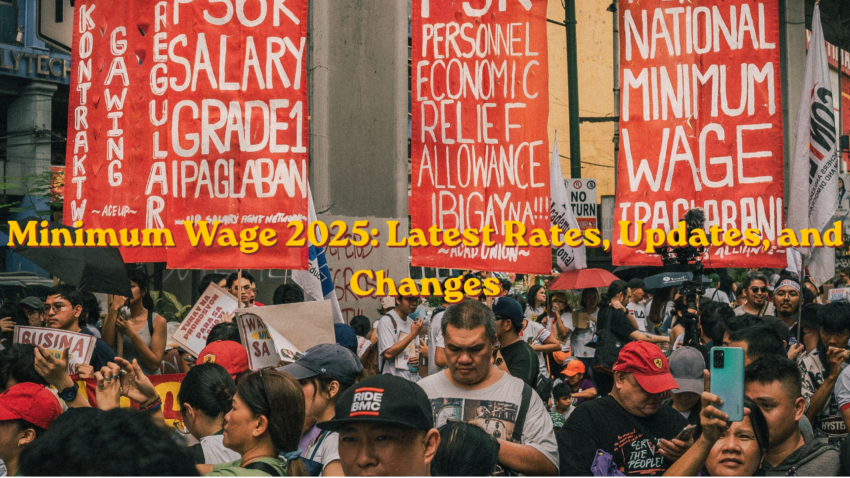
Minimum-wage workers entered 2025 amid a broad set of pay changes, but there was no single rate that applied everywhere. New rules took effect at different times across countries, U.S. states, counties, and cities, while separate schedules covered particular industries and worker categories. Some jurisdictions increased their base rate through legislation or automatic indexation; others maintained existing amounts or adopted targeted adjustments for hospitality, health care, or government contractors. As a result, the practical meaning of minimum wage 2025 depends on where the work is performed, which employer is covered, and when the relevant pay period begins.
Several wage concepts should also be distinguished. A statutory minimum is the legally required floor for covered employees. An employer’s voluntary starting wage may be higher and can remain unchanged even when a legal rate rises. A tipped worker may receive a lower direct cash wage under a tip-credit system, provided applicable rules ensure the worker receives at least the required total compensation. A living-wage policy is different again: it generally sets a higher target based on local household costs and may apply only to public contractors, selected employers, or particular projects. These terms are not interchangeable, and using the wrong one can produce an inaccurate estimate of expected earnings.
Before relying on any published figure, identify the governing jurisdiction and the effective date, then check whether the employee, workplace, and industry fall within an exception. This guide examines federal requirements, state-level increases, local ordinances, tipped work, youth and training wages, employer obligations, enforcement mechanisms, and scheduled future adjustments. It also explains why a rate announced in 2025 may begin later, why a local rule can exceed a state or national floor, and how payroll changes should be assessed by pay period rather than announcement date. Careful attention to these details helps workers and employers apply the correct rate and understand the broader policy shifts shaping pay in 2025.
The federal minimum wage remains an important reference point for employers and workers in 2025. Under the Fair Labor Standards Act (FLSA), the standard federal hourly minimum is $7.25 for covered, nonexempt employees. This rate has remained unchanged since July 24, 2009. Although it establishes a national floor, it does not necessarily represent the amount most employees must receive because state and local governments may set higher wage requirements.
Unlike some state and local systems, the federal rate is not automatically adjusted for inflation or changes in the cost of living. A federal increase requires an act of Congress and approval through the legislative process. Consequently, employers should not assume that the federal minimum wage 2025 rate will change because prices or consumer costs have increased. Legislative proposals may affect future policy, but a proposal does not alter the legal rate unless it becomes law.
When more than one wage law applies, employers generally must pay the highest applicable rate. For example, a worker covered by the FLSA may be entitled to a state or city minimum wage that exceeds the federal floor. Employers should also review rules concerning tipped employees, including requirements governing direct wages, tip credits, notice, and limitations on using tips to satisfy wage obligations.
The FLSA contains exemptions and special categories that can change how minimum-wage requirements apply. Depending on the facts and the applicable legal provisions, these may include certain agricultural workers, employees of seasonal or recreational establishments, qualifying students, trainees, and some workers with disabilities employed under authorized arrangements. These categories are not blanket exceptions. Each has precise statutory, regulatory, and sometimes certification requirements, and job titles alone do not determine eligibility.
Because federal, state, and local requirements can change independently, businesses should verify the current rules before setting pay rates or classifying workers. The U.S. Department of Labor’s Wage and Hour Division is the authoritative source for the federal rate, FLSA coverage information, and current compliance guidance. Employers may also need to consult their state labor agency or qualified counsel for requirements beyond the federal baseline.
State minimum wages in 2025 will not change through one uniform national process. Each state may establish its wage floor through legislation passed by lawmakers, a voter-approved ballot measure, a wage commission, or an automatic indexing formula tied to inflation or another economic measure. Some jurisdictions use more than one method, while others retain the federal rate unless state policymakers approve a higher standard.
Workers and employers may encounter several types of changes during the year. Scheduled annual increases are part of a multiyear law or ballot measure and generally provide advance notice of the new rate. Inflation-linked adjustments are calculated after economic data becomes available, which can produce a different increase from the amount initially expected. Newly approved increases may result from legislation, local initiatives, or commission decisions and can introduce a new wage floor after the year has begun. Other states may leave their rate unchanged, either because existing law does not require an adjustment or because the calculated increase is not triggered.
The effective date is also important when reviewing minimum wage 2025 information. A change may begin on January 1, but some states schedule increases for another date, such as July 1. Certain rules apply the new rate to an employer’s first full payroll period after the effective date rather than to every hour worked immediately on that date. Payroll timing, work location, and the employee’s classification can therefore affect the amount due.
To assess a state’s obligation, compare its rate with the federal minimum wage, which acts as a floor under federal law for covered workers. Employers generally must pay the higher applicable state, local, or federal rate, although coverage rules and exemptions vary. Employees should review pay statements after a scheduled change and raise questions promptly if the applicable rate appears incorrect.
For the precise minimum wage 2025 rate, effective date, coverage requirements, and industry exceptions, consult the relevant state labor department. Official agency guidance is more reliable than a general national table, particularly where rates differ by employer size, occupation, geographic area, or payroll schedule.
Finding the correct minimum wage 2025 rate may require looking beyond the statewide figure. Cities and counties can adopt local ordinances with higher pay floors, particularly in high-cost housing and employment markets. These rules generally apply based on where the work is performed, not simply where the employer’s headquarters or payroll department is located. A worker in one municipality may therefore have a different legal rate from a colleague performing the same job in a neighboring jurisdiction.
Local laws may also use different categories. Some establish separate rates for large and small employers, often based on employee count, annual revenue, or benefits provided. Others cover specific groups, including hotel and hospitality employees, health-care workers, airport employees, security personnel, or workers employed by businesses receiving public contracts. The effective date, required benefits, training wages, and rules for tipped work can also vary. Employers should not assume that compliance with the state rate satisfies every local requirement.
Geographic boundaries require particular attention. A business near a city line may fall under a municipal ordinance while a nearby worksite does not. Employees who travel between locations, provide services at customer sites, or work from home may need their time allocated according to the jurisdiction where each work period occurs. Remote and mobile workers can create additional questions when their residence, employer, and assigned worksite are in different places. Timekeeping records should identify locations clearly enough to support the applicable rate.
A practical review begins by identifying the exact worksite or locations where duties are performed. Next, determine the employer’s size, industry, worker classification, and whether a local ordinance covers the job. Check the city or county’s official website, labor department, wage notice, or enforcement agency for the current rate and effective date. Because local governments may update schedules independently of statewide legislation, review these sources separately and retain dated records of the research. When the rules are unclear, employers and workers should seek guidance from the relevant labor agency or qualified employment counsel before relying on a rate.
Under minimum wage 2025 rules, tipped employees may be paid through a combination of direct wages and qualifying tips. Federal law permits an employer to take a tip credit when the employee receives sufficient tips and performs work that qualifies under applicable requirements. The employee’s direct cash wage plus the creditable tips must equal at least the applicable federal, state, or local minimum wage for every workweek. If the combined amount falls short, the employer must pay the difference; the shortfall cannot lawfully be shifted to the worker.
Tip-credit rules are not uniform. Some states require employers to pay the full state minimum wage before tips, while others prohibit or restrict tip credits, impose higher direct-wage requirements, or apply separate rules to shared tips and service charges. Employers must also follow restrictions on who may participate in a tip pool and how creditable tips are calculated. Consequently, a payroll practice permitted under federal law may still violate state or local requirements.
Young workers may qualify for a limited youth or training wage, but these provisions are narrow rather than automatic exceptions. Federal rules can allow eligible employees under age 20 to receive a reduced wage during a limited initial period, subject to age, duration, and job requirements. Student learners and certain full-time students may qualify for reduced rates only when specific conditions are satisfied, often including an authorization or certificate. Employers should retain supporting records, including age information, school status, certificates, schedules, and the dates during which a reduced rate applies.
Apprentices and participants in approved vocational, rehabilitation, or other special programs may also be covered by distinct pay arrangements. Eligibility can depend on program approval, written agreements, training content, supervision, and limits on the proportion of time spent in productive work. Reduced rates generally cannot continue indefinitely or apply to workers who fail the relevant criteria. Because federal, state, and local rules may differ, employers and workers should verify the current requirements before relying on any special wage category.
Minimum wage 2025 changes may result from automatic indexing, a legislative schedule, or a combination of both. Under an indexing system, the wage is linked to an economic measure such as the Consumer Price Index (CPI), another consumer-price index, or a locally defined cost-of-living formula. When prices rise, the formula produces a new hourly rate intended to preserve purchasing power. Some laws use an annual average, a specified measurement period, or a capped percentage, so the adjustment may not match the most recently reported inflation figure.
Legislative increases work differently. A statute may establish several step increases, authorize an agency to calculate the next rate, or direct officials to announce a new figure by a particular date. Rates can therefore differ between states, cities, counties, and industry sectors. Even jurisdictions with similar inflation measures may apply different base years, caps, exemptions, or rounding conventions. An agency might round a calculated amount to the nearest cent, while another rule may require rounding to a specific increment. Publication dates and delayed implementation can also affect payroll calculations.
Employers and employees should distinguish an announced future rate from the rate currently in force. A government notice may be issued months before its effective date, meaning the existing rate remains legally applicable until the transition occurs. For reliable monitoring, first review enacted legislation and agency rules. Next, confirm the official notice, including the effective date, covered workers, exemptions, and any regional or industry-specific provisions. Payroll systems should be updated before the new rate begins, with testing for hourly wages, overtime, differentials, and tipped compensation where relevant.
After implementation, audit the first affected pay periods, particularly when a pay period crosses the change date. Retain the official notice and document any manual adjustments. A wage increase may also coincide with higher salary thresholds for exempt employees, revised paid-leave rules, updated workplace notices, scheduling requirements, or industry-specific compensation standards. Reviewing these related obligations alongside the wage rate helps prevent a technically correct hourly update from leaving other payroll or compliance requirements unchanged.
To determine whether your pay complies with the minimum wage 2025 rules, begin with the location where the work was physically performed. Federal, state, county, and city requirements can differ, and the highest applicable rate generally controls. Confirm whether your job is covered by a special classification, such as agricultural, seasonal, domestic, nonprofit, or public-sector work. Also check employer size, because some laws apply different rates or exemptions according to the number of employees or the employer’s annual revenue.
Next, review personal factors that may affect the applicable rate. Age, student status, trainee status, and participation in an approved youth or learner program can sometimes permit a temporary or reduced wage, but these exceptions usually have specific conditions. Tipped employees should verify both the direct cash wage and the tip credit. An employer generally cannot count tips beyond the amount permitted by law, use tips belonging to other workers improperly, or apply a tip credit when required notice has not been provided. Calculate total compensation for each workweek rather than relying only on the stated hourly rate.
Compare your pay stubs with schedules, time-clock records, and actual hours worked. Common problems include an unchanged hourly rate after a legally required increase, unpaid opening or closing duties, missed time spent preparing equipment, and unauthorized deductions for shortages, uniforms, tools, or other expenses. Misclassification as an independent contractor, exempt employee, or manager can also conceal unpaid minimum wages or overtime. Record the dates, hours, rates, tips, deductions, and any communications concerning pay.
Keep copies of pay stubs, schedules, time records, tip reports, employment agreements, written policies, and employer notices announcing wage changes. Raise apparent errors promptly with payroll or human resources and request a written explanation. If the issue is not corrected, contact the relevant state labor agency or the U.S. Department of Labor for information about filing a wage claim. When substantial wages are involved, records are incomplete, or retaliation follows a complaint, consider obtaining advice from an employment attorney or worker-advocacy organization. Retaliation for asserting wage rights may itself violate applicable law.
Employers should begin with a jurisdiction inventory. List every state, county, city, territory, and other location where employees perform work, including remote-work locations and temporary assignments. Record each applicable effective date and rate, then map every employee to the correct rule based on work location, age, occupation, industry, and employment status. Do not assume that a single companywide rate satisfies all requirements. A documented matrix can help payroll teams identify the highest applicable minimum wage 2025 rate and preserve the reasoning behind each classification.
Next, review exceptions and special categories. Confirm rules for tipped employees, minors, apprentices, trainees, learners, agricultural workers, commissioned staff, piece-rate workers, and employees covered by local ordinances or collective agreements. Examine whether service charges may be retained or must be distributed, and determine how commissions, credits, and piece-rate earnings affect wage compliance. Update payroll, scheduling, timekeeping, and human-resources systems before each effective date. Test rounding, split shifts, multiple rates, work performed across jurisdictions, and retroactive corrections.
Refresh job offers, compensation letters, employee handbooks, workplace posters, intranet materials, and onboarding documents. Managers should receive clear instructions about recording time, approving schedules, handling tips, and responding to pay questions. Budget for direct wage increases as well as overtime, payroll taxes, paid leave, insurance contributions, bonuses, and other benefits tied to earnings. A higher minimum rate can also create wage compression between entry-level workers and experienced employees, requiring broader pay-range adjustments.
Review how the change affects overtime calculations, commission plans, piece-rate systems, service charges, and salaried-exempt classifications. Confirm that exempt employees still satisfy applicable salary thresholds and duties tests; a small increase in the hourly floor can change the cost or availability of an exemption. Document the compliance review, approvals, system tests, and employee communications. After every effective date, conduct a payroll audit using representative pay periods, compare results with the jurisdiction matrix, and correct discrepancies promptly. Multi-location operations, unusual compensation plans, and overlapping local rules may warrant advice from qualified employment counsel or a payroll specialist.
A reliable way to check the minimum wage 2025 rate is to begin with official government sources rather than a static online list. Use the U.S. Department of Labor for federal information, then consult the relevant state labor department. Workers in cities or counties with local wage ordinances should also review the official municipal or county government website. Enacted statutes, regulations, and formal agency notices are stronger authorities than news articles, search-result snippets, social media posts, or unofficial wage charts.
Verification should cover more than the hourly dollar amount. Confirm the date on which the rate takes effect and whether a later increase is already scheduled. Check which workers are covered, including employees in particular industries, students, apprentices, agricultural roles, or other categories with special rules. Employers should verify whether an employer-size threshold applies, because some jurisdictions impose different rates on larger and smaller businesses. Where tipped employees are involved, review the permitted tip credit, cash-wage requirement, notice obligations, and rules requiring the employer to make up any shortfall.
Posting requirements also deserve attention. Labor agencies commonly require employers to display current workplace notices where employees can readily see them, and some jurisdictions require separate notices for local wage laws or specific worker protections. Retain the source, publication date, and effective-date language used to determine payroll settings, and check whether the agency has issued a correction or enforcement guidance.
A concise review checklist can help. Employees should identify their work location, compare their pay with federal, state, and local requirements, confirm the applicable effective date, and ask the labor agency about suspected violations. Employers should identify every applicable jurisdiction, classify covered workers correctly, review tip-credit and size rules, update payroll systems, distribute required notices, and document the source used.
Monitoring should continue throughout the year. Changes made in 2025 may shape future legislative proposals, automatic inflation adjustments, and regional pay standards. Periodic checks of official sources remain essential as new statutes, agency notices, and scheduled increases replace outdated information.