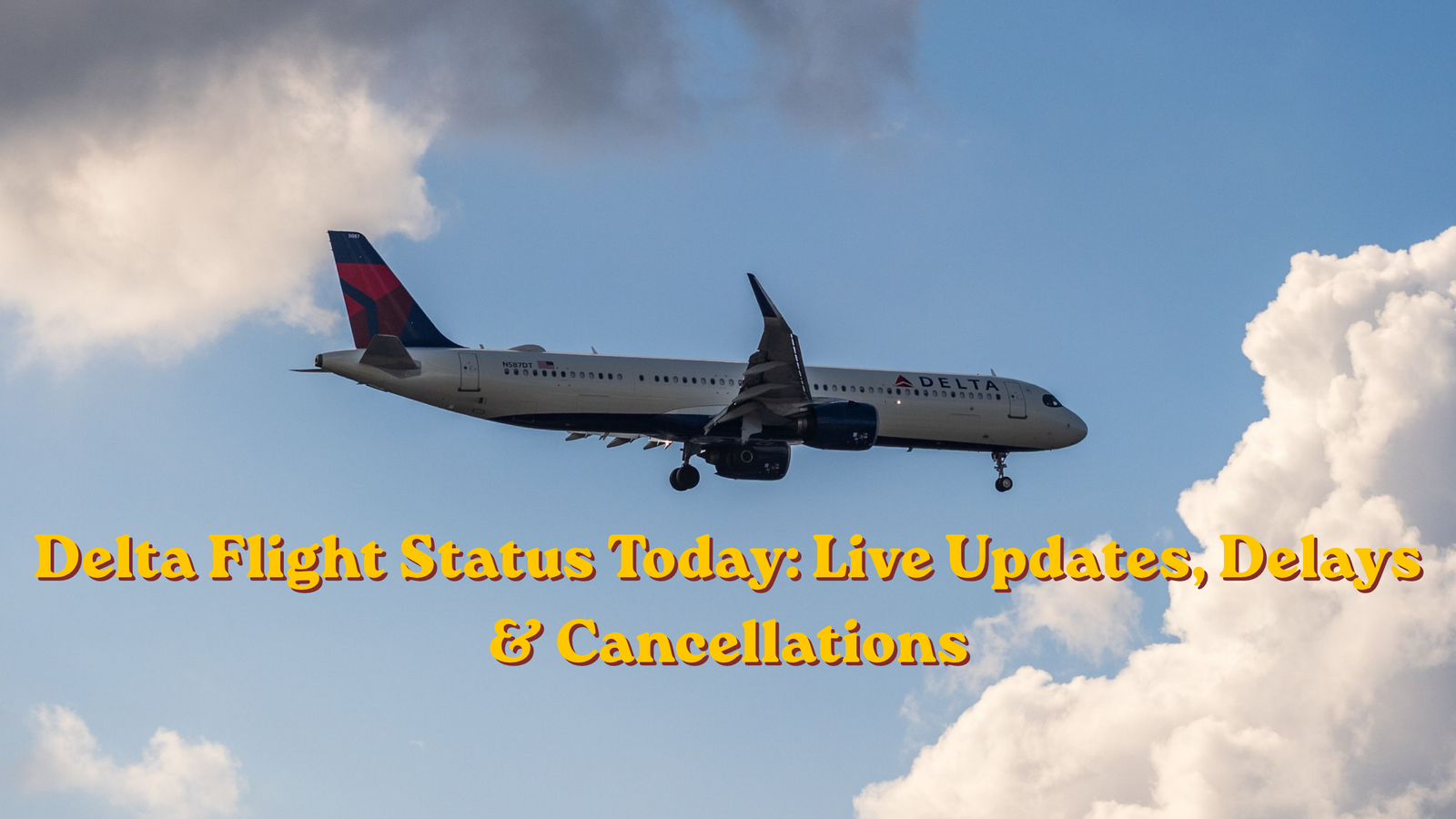
Travelers looking for delta flight status today should begin with Delta’s official flight-status lookup. Enter the flight number and travel date when available, then verify the departure and arrival airports shown in the results. If the flight number is unknown, searching by route and date may help identify the correct service. This source is generally the most direct reference for schedule changes, gate information, delays, cancellations, and other operational updates.
The Fly Delta app provides another convenient way to monitor a trip in real time. After signing in and adding the itinerary, passengers may receive updated departure times, gate changes, boarding reminders, baggage information, and connection details. Delta may also send alerts by text message, email, or push notification, depending on the contact preferences selected during booking or in the traveler’s account. Confirmation emails are useful as well, but they should be checked against current operational updates because the original itinerary may no longer reflect the latest conditions.
Airport departure and arrival boards remain important, particularly when a traveler is already at the terminal or meeting an arriving passenger. Check the board for the relevant airport, airline, flight number, and date, while allowing for occasional delays in posting updates. When contacting Delta staff, have the confirmation number, flight number, travel date, departure airport, arrival airport, and any connection details ready. These details can help distinguish between similarly routed flights and identify whether a missed connection may be affected.
Status descriptions can indicate different stages of a journey. “Scheduled” means the planned time remains listed, while “estimated” indicates a revised expected time. “Boarding” means passengers are being accepted, “departed” confirms the aircraft has left, and “landed” indicates arrival. “Delayed” signals a later operation, “canceled” means the flight will not operate as planned, and “diverted” means it has been routed to an alternate airport.
Official Delta channels and airport sources should take priority over third-party tracking services, which can update at different times. Information may change quickly during severe weather, peak travel periods, or other operational disruptions, so recheck the status before leaving for the airport and before heading to the gate.
Flight disruptions can result from conditions both within and outside an airline’s direct control. Thunderstorms, strong winds, visibility problems, and winter weather may slow airport operations or make a departure unsafe. Air traffic control restrictions can also limit the number of aircraft permitted to enter or leave a region. Other common causes include aircraft maintenance, limited crew availability, airport congestion, and a late-arriving aircraft that is scheduled to operate the next flight.
A disruption can affect more than the published departure time. Boarding may begin later, move to another gate, or close at a revised time. A delayed departure can lead to a later arrival, and checked baggage may take additional time to reach the claim area. Travelers with connections face added risk, particularly when the remaining itinerary has limited service or requires a minimum connection time. Monitoring the delta flight status today can help passengers identify changes as they develop, although airport displays and airline notifications should also be reviewed.
Not every schedule change has the same meaning. A minor adjustment may involve a small shift in departure or arrival times. A significant delay can substantially alter a traveler’s plans and may require a different connection. A cancellation means the scheduled flight will not operate, while a diversion occurs when an aircraft lands at an airport other than the planned destination, usually because of operational or safety considerations.
When a disruption occurs, passengers should check whether Delta has automatically issued a new itinerary through its website, mobile application, email, or text message. Review the proposed routing carefully, including connection times, airports, and travel dates. If it is unsuitable, compare available alternative flights and follow the airline’s instructions for accepting or changing the reservation. Before leaving for the airport, confirm the latest itinerary, gate information, and any required check-in details. The reason for the disruption and available remedies may vary according to the circumstances, route, ticket conditions, and applicable passenger-protection rules.
When checking the delta flight status today reveals a delay or cancellation, begin with Delta’s official app, website, email, or text notifications. These sources usually provide the most current departure information, gate changes, cancellation details, and available rebooking options. Confirm that the information applies to your complete reservation, especially when several passengers or multiple flights are included.
Review replacement itineraries carefully before accepting one. Compare the new departure time, connection airport, layover length, and final arrival time rather than focusing only on the first segment. A seemingly earlier flight may involve a difficult connection or arrive later than another option. If the proposed itinerary does not meet your needs, ask about alternatives through an airport customer-service agent, Delta’s phone support, or available digital messaging channels. Acting promptly can be important when seats on later flights are limited.
Passengers with tight connections should check the entire itinerary and monitor every segment for changes. If the first flight is delayed, determine whether the connection remains realistic and ask an agent about protection on a later flight before leaving the gate area. Depending on the length and cause of the disruption, it may be practical to remain at the airport, but travelers should also ask whether checked bags will continue to the destination, be held, or need to be collected. Verify ground transportation arrangements and contact a hotel promptly if an overnight stay becomes necessary.
Keep boarding passes, notification messages, rebooking records, and itemized receipts for meals, lodging, transportation, or other necessary expenses. These documents can support a request for reimbursement or a travel-credit review, but approval depends on the reason for the disruption, applicable passenger protections, and Delta’s current policies. Do not assume every expense qualifies, and avoid committing to a costly replacement itinerary or transportation plan until the airline’s instructions and coverage are clear.
Before leaving home, check the Delta flight status today through the airline’s official website or mobile app, and compare it with the confirmation details in your reservation. A flight may remain scheduled while a gate, departure time, or aircraft assignment changes. Check again while traveling to the airport, particularly if weather, air-traffic restrictions, or airport disruption is reported. Allow sufficient time for check-in, baggage drop-off, security screening, and an unexpected walk to the gate.
Continue monitoring both the originating flight and every connecting segment. A delay on the first leg can affect a connection, while a change to the second leg may require different timing even when the initial departure remains on schedule. After reaching the terminal, review display boards, app notifications, text messages, and email alerts. Gate assignments can change quickly, so avoid relying on an earlier screenshot or announcement. Keep the phone number and email address linked to the reservation active and accessible throughout the journey.
A practical response checklist includes saving the confirmation code, taking screenshots of revised itineraries, charging all devices before departure, and carrying a charging cable or power bank where permitted. Keep essential medications, identification, travel documents, valuables, and other necessities in a carry-on rather than checked baggage. If information in the app conflicts with a terminal announcement, ask airport staff or the gate agent to clarify which instruction is current. Record any new connection, boarding, or baggage guidance before moving away from the service desk.
Live flight information is provisional until the aircraft departs and can change again after landing, especially during severe weather or wider airport disruption. Recheck updates until boarding, listen for final gate announcements, and verify onward arrangements after arrival. This ongoing attention reduces surprises and gives passengers more time to respond calmly when schedules or airport procedures change.