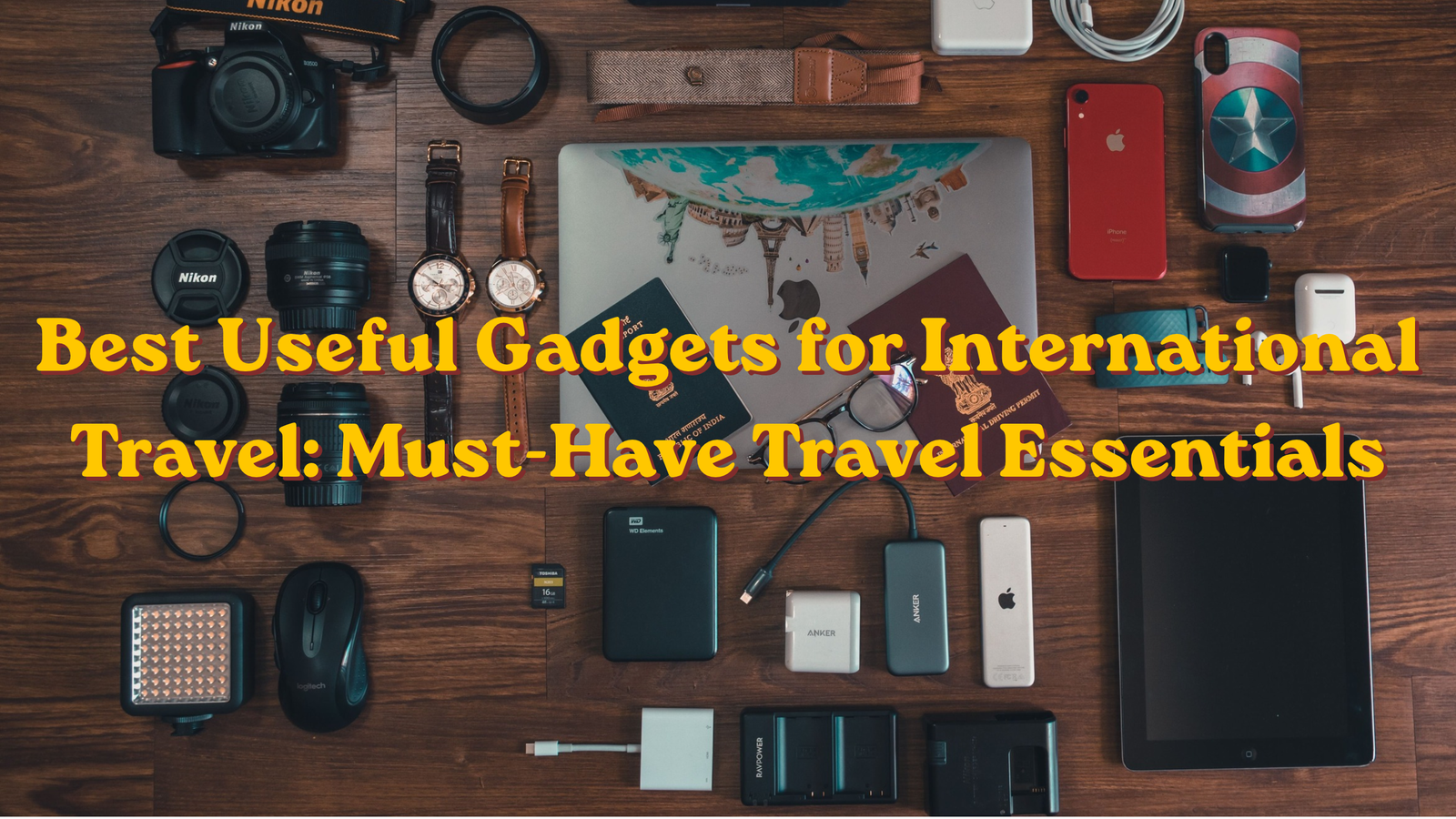
Choosing the best useful gadgets for international travel begins with identifying practical needs rather than collecting the newest technology. Every item should solve a clear problem, earn its space in the luggage, and remain simple to operate when travelers are tired, unfamiliar with local systems, or moving between destinations. A compact device that performs several functions is generally more valuable than several single-purpose accessories.
Portability is a primary consideration. Lightweight, foldable, or pocket-sized equipment reduces baggage weight and leaves room for clothing and essentials. Battery life matters equally, particularly on long flights, train journeys, or excursions far from reliable electrical outlets. Select devices with efficient power use, quick charging, and battery indicators. A durable construction, protective case, and resistance to moderate moisture or rough handling can prevent a minor accident from becoming a major disruption.
International compatibility must be checked before departure. Confirm destination voltage standards, plug shapes, frequency requirements, and whether a voltage converter is needed in addition to a travel adapter. Travelers should also review airline rules for lithium batteries, power banks, and electronic equipment, since some items must be carried in cabin baggage. Wireless devices may be subject to restrictions on aircraft or limitations under local regulations, so verify requirements with the airline and relevant authorities.
The destination and itinerary should guide the final selection. A short city break with frequent access to cafés and hotels requires different equipment from a month-long camping trip. Climate, planned activities, travel style, access to electricity, and available luggage space all affect what belongs on the packing list. A weather-resistant phone pouch may be useful in a tropical location, while a reliable power bank may be more important in areas with occasional outages.
Security and ease of use should not be overlooked. Choose devices with strong passwords, updated software, privacy settings, and dependable locking features, while avoiding complicated equipment that requires constant maintenance. Before leaving, test every gadget and its cables together. A small group of versatile, proven devices is usually more effective than an overloaded bag of unnecessary technology, helping travelers remain prepared without adding avoidable weight or stress.
Reliable power and connectivity can make international travel considerably easier. A universal travel adapter should be the first item in an electronics kit, but travelers should confirm its country-specific plug compatibility before departure. Select a model with both USB-C and USB-A charging ports so it can power newer phones, tablets, cameras, and older accessories without carrying several wall chargers. A compact power bank adds useful backup during airport transfers, long excursions, or unexpected delays. Fast-charging cables should match the required devices and charging standards, while a multi-device charging station or compact charging hub can reduce outlet clutter in hotels.
Travelers should distinguish a plug adapter from a voltage converter or transformer. An adapter changes the shape of a plug, but it does not change electrical voltage. A converter electronically adjusts voltage for compatible appliances, whereas a transformer uses coils to raise or lower alternating-current voltage and is generally heavier. Before connecting any device, check its label or charger for a voltage range such as “100–240V.” Dual-voltage electronics can normally be used abroad with only a suitable plug adapter; single-voltage devices may require appropriate conversion equipment or should be left at home.
Affordable mobile data also depends on the right connectivity tools. An eSIM-compatible phone can activate a regional or country-specific data plan without handling a physical card. A portable Wi-Fi hotspot may connect several devices, although its rental, data, and battery costs should be compared with eSIM options. For phones using physical SIMs, pack a SIM-eject tool and a small labeled container for the original card.
Organization prevents minor power problems from becoming major disruptions. Label cables by device, carry at least one spare charging cable, and keep a backup power bank charged but protected from heat. Place essential chargers, adapters, and cables in an accessible pouch rather than checked luggage. These practical choices help travelers assemble the best useful gadgets for international travel without carrying unnecessary equipment.
Long journeys become more manageable when a few carefully chosen devices address several needs at once. Noise-canceling headphones or earbuds can reduce aircraft, train, and airport noise while also providing entertainment or language-learning audio. An e-reader is usually more practical than carrying several books, and its long battery life makes it useful during delays. A compact travel alarm provides a dependable wake-up option when phone batteries are low, while a digital luggage scale helps prevent costly overweight-bag fees before returning home. A small flashlight, preferably rechargeable, can assist during late arrivals, power interruptions, or poorly lit accommodation.
Navigation and communication tools are equally valuable in unfamiliar destinations. Travelers should download offline maps, transport information, and essential addresses before departure, since mobile service may be unreliable or expensive. Translation apps with offline language packs can often replace a dedicated translation device, although a standalone translator may help travelers who need larger controls or more frequent voice translation. A smartwatch can display boarding updates, directions, notifications, and contactless payment options without requiring constant phone access. A phone mount or compact stand is useful for hands-free navigation, video calls, and watching content, but a foldable model should be chosen to avoid unnecessary bulk.
Personal comfort gadgets are most worthwhile when their benefits match the itinerary. A portable water purifier can be valuable in regions where tap water is questionable, but it is unnecessary where safe bottled or treated water is readily available. A rechargeable fan helps in hot climates and crowded transport, while a mini humidifier may improve comfort in dry aircraft cabins or hotel rooms; both should be selected only when their size and charging requirements are acceptable. A compact electric toothbrush offers familiar care with less space than a full-sized model. Overall, the best useful gadgets for international travel are lightweight, durable, rechargeable, and multifunctional. Travelers should prioritize devices that replace several single-purpose items, use common charging standards, and remain helpful even when connectivity, electricity, or luggage space is limited.
Travel technology should protect both possessions and information without adding unnecessary complexity. A Bluetooth luggage tracker can help locate checked bags, while a compact combination lock or lockable cable can secure zippers, lockers, and a suitcase to a fixed object. In shared accommodation, a portable safe offers an additional barrier for passports, cash, and spare cards. Keep valuables separated rather than storing everything in one bag, and place essential documents and critical devices in carry-on luggage.
RFID-protective storage can reduce the risk of unauthorized scans of compatible payment cards and identification documents, although it should complement, not replace, sensible awareness. Create encrypted digital copies of passports, reservations, insurance information, prescriptions, and emergency contacts. Store them on a password-protected backup drive and in a secure cloud account, with access available offline when possible. Use unique, strong passwords, a password manager, device encryption, and multi-factor authentication before departure. Automatic backups should be enabled and tested.
Privacy screens can limit visual access to phones and laptops in airports, trains, and cafés. Avoid connecting to unsecured Wi-Fi; use mobile data or a reputable virtual private network when appropriate, and disable automatic network connections. Public USB charging stations can expose devices to data risks, so carry a wall charger, charging cable, and power bank instead. Check the airline’s current rules for power-bank capacity, spare batteries, and cabin transport, since batteries generally belong in carry-on baggage.
Organize chargers, adapters, cables, memory cards, and small accessories in a protective tech pouch, labeling similar items to speed inspections. Before leaving, test the tracker, locks, safe, backup drive, authentication methods, and chargers; confirm voltage, plug, and device compatibility; download maps, translation tools, tickets, and emergency resources for offline use; verify cloud access; and remove gadgets that do not support the itinerary. This practical check ensures the best useful gadgets for international travel remain reliable, purposeful, and manageable throughout the journey.